Letter Combination Tool: Amazing Ways to Find Words
Table of Contents
Every word game, puzzle, or vocabulary exercise ultimately comes down to one thing: what can you build from the letters in front of you? Letter combination tools exist to answer that question quickly and accurately, unlocking possibilities that would take far too long to work out by hand.
What Letter Combination Tools Actually Do
At their core, these tools take a set of input letters and systematically generate every valid combination, checking each one against a dictionary to filter out anything that is not an actual word. This process, called combinatorial search, would be tedious and error-prone for a human to do manually, especially as the number of letters grows, since the number of possible arrangements increases dramatically with each additional letter.
Why Manual Letter Combination Is So Difficult
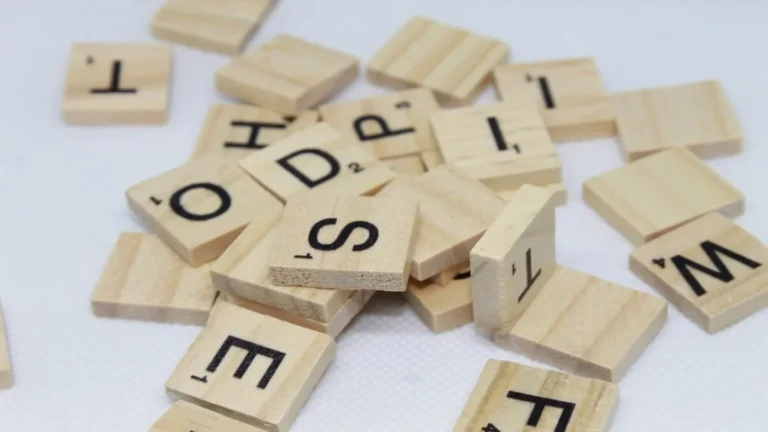
Consider a rack of seven letters in Scrabble. The number of ways those letters can theoretically be arranged runs into the thousands once you account for using subsets of two, three, four, five, six, or all seven letters. No player, no matter how skilled, can mentally check every one of those combinations against their vocabulary within a normal turn time limit. This is exactly the gap that letter combination tools fill.
Practical Applications Across Word Games
- Scrabble and Words with Friends players use combination tools to find every scoring option from their rack
- Wordfeud players use them to check Wordfeud-specific dictionary matches before committing to a play
- Crossword solvers use them when they have a few known letters and need to find words that fit a specific pattern
- Puzzle designers use them to verify that a themed word list only contains legitimate, checkable words
Filtering for Precision
Raw letter combination results can be overwhelming, sometimes returning hundreds of valid words from a single input. Good tools solve this with filtering options such as word length, starting letter, ending letter, or a required letter sequence anywhere in the word. These filters transform an unwieldy list into a short, targeted set of the exact words you actually need for your situation.

Letter Combinations Beyond Gameplay
Letter combination tools are also popular for more playful, non-competitive uses. People type in names, phrases, or random letter strings just to see what interesting words emerge, treating the tool almost like a linguistic curiosity engine. Teachers use this approach in classrooms too, turning vocabulary building into an interactive activity where students explore what their own names or spelling words can become. For a related way to explore words without starting from your own letters, WordWizy’s word tool lets you browse by theme, from playful words to more advanced vocabulary.
Choosing a Reliable Letter Combination Tool
The best tools combine a large, accurate, regularly updated dictionary with fast processing and flexible filters. Speed matters especially during timed gameplay, where a slow tool can cost you valuable turns. Clear, organized results grouped by word length also make it much easier to scan and select the best option quickly.
Final Thoughts
From competitive word games to casual curiosity, letter combination tools unlock possibilities hidden inside letters you already have. Enter your letters above, apply a few filters, and discover words you would likely never have found on your own.
Letter Frequency and Combination Probability
Not all letters appear with equal frequency in the English language, and understanding this distribution helps explain why some letter combinations yield dozens of possible words while others yield almost none. Common letters like E, A, R, S, and T appear in a huge proportion of English words, meaning a letter set rich in these appears far more productive than one dominated by rarer letters like Q, X, or Z, even when both sets contain the same number of total letters.

Letter Combinations in Language Learning
Language teachers sometimes use letter combination exercises deliberately to help students internalize common patterns and spelling conventions within a new language. Presenting a student with a set of letters and asking them to generate as many valid words as possible reinforces pattern recognition for common prefixes, suffixes, and letter clusters far more actively than passive vocabulary memorization, making it a genuinely useful classroom activity beyond its recreational uses.
The Mathematics Behind Combination Tools
Behind every letter combination tool sits a fairly elegant piece of computer science, typically involving efficient dictionary lookup structures that allow near-instant checking of whether a specific letter arrangement forms a valid word, even when searching against dictionaries containing hundreds of thousands of entries. This efficiency is what makes modern combination tools feel instantaneous, a stark contrast to the minutes or hours a manual search through a printed dictionary would require for the same task.
Letter Combinations for Naming and Branding
Beyond puzzles and games, letter combination logic occasionally finds its way into naming and branding work, where someone wants to check what pronounceable, real-word options exist within a specific set of letters, such as a founder’s initials or a location name. While this is a smaller, more niche use case than gameplay, it illustrates how flexible and broadly applicable letter combination tools really are once you look beyond their most obvious application.
Want to explore more? See our guide on Word Puzzle Strategies: Solve Like a Pro and Word Generator: Create Words from Letters. For further reading, check out Merriam-Webster Dictionary and the NASPA official word lists.
Frequently Asked Questions
What is a letter combination tool used for?
It helps you find all the valid words that can be formed from a specific set of letters, which is useful for word games and vocabulary practice.
Can these tools help with Scrabble and Wordle?
Yes, letter combination tools are commonly used to find valid Scrabble plays or explore possible Wordle guesses.
Are letter combination tools considered cheating in word games?
It depends on the context. In casual or solo play they are a learning aid, but many competitive games and opponents consider them unfair to use during a match.



2 Comments
Comments are closed.