Find Words From Letters: The Ultimate Word Hack
Table of Contents
Introduction: The Frustration Every Word Game Player Knows
You stare at a jumble of letters on your rack. The clock is ticking. Your opponent just dropped a 50-point word, and all you can see in your tiles is gibberish. Sound familiar?
Whether you’re locked in a fierce Scrabble match, grinding through today’s Wordle puzzle, or just trying to beat your own high score in Words With Friends, there comes a moment when your brain simply refuses to cooperate. The letters are right there, but the words hide from you like shy animals in tall grass.
That’s exactly why learning to find words from letters efficiently is one of the most valuable skills any word game enthusiast can develop. And it’s not cheating — it’s strategy. In this guide, you’ll discover proven techniques, expert-level tips, and powerful tools that will transform how you approach every letter puzzle you encounter.
What Does It Mean to Find Words From Letters?
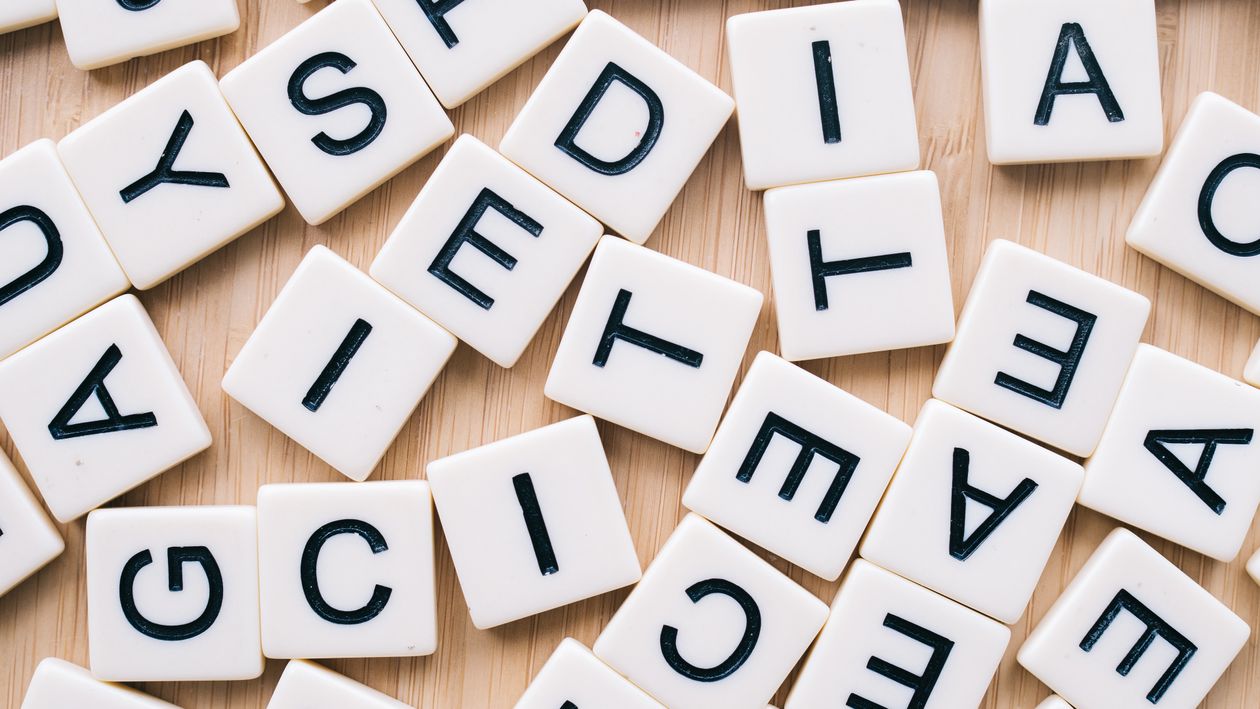
At its core, the ability to find words from letters is about pattern recognition. You take a set of random characters — say, E, R, T, A, S, L — and rearrange them into valid English words. From that set alone, you could pull out “stare,” “steal,” “tales,” “laser,” “alert,” and dozens more.
This skill goes by many names. Some people call it unscrambling. Others call it anagramming. Game developers built entire genres around it. But the underlying challenge is always the same: given a fixed pool of letters, what words can you construct?
If you enjoy working with different letter combinations, our letter combination tool guide covers everything you need to know about maximizing your word-finding potential.
It’s More Than Just Games
While most people want to find words from letters because of a game they’re playing, the skill has real-world benefits. Teachers use it to help students build vocabulary. Linguists study letter patterns to understand language structure. Crossword constructors rely on it daily.
Even if you never play a competitive word game, training yourself to spot words within a scramble of letters sharpens your cognitive flexibility. It’s a mental workout that pays dividends in reading speed, spelling accuracy, and verbal fluency.
Looking for effective ways to sharpen your mind through games? Check out our guide on brain training games that can boost your cognitive performance.
Why You Need a Reliable Letter Solver
Your brain is remarkable, but it has limits. The average English speaker knows between 20,000 and 35,000 words. A comprehensive word list — like the one used in official Scrabble tournaments — contains over 180,000 entries. No human can search through all of those in their head.
That’s where a dedicated letter solver earns its place in your toolkit. Think of it less like a cheat sheet and more like a training partner. When you use a letter solver after a game round, you discover words you missed. Over time, those discoveries stick in your memory, and your unaided performance improves.
Speed Matters in Competitive Play
In timed games, every second counts. You don’t have the luxury of methodically testing every possible letter combination in your head. A reliable letter solver can confirm or eliminate possibilities in milliseconds, helping you focus your mental energy on strategy — tile placement, board control, and point maximization — rather than raw word discovery.
For practice sessions, tools like the Word Unscrambler on WordWizy let you input your letters and instantly see every valid word you could form. It’s the fastest way to expand your working vocabulary.
How to Find Words From Letters: A Step-by-Step Approach
Before you reach for any tool, it helps to have a mental framework. Here’s a systematic method you can use to find words from letters, whether you’re working with 5 tiles or 12.
Step 1: Identify Common Letter Pairings
Start by scanning your letters for common two-letter combinations: TH, SH, CH, QU, PH, WH, ST, TR, and so on. These digraphs appear in thousands of English words, and spotting them immediately narrows your search space.
For example, if you spot T and H among your letters, you can mentally group them and then look for what fits around “TH.” Words like “the,” “that,” “them,” “thick,” and “thrash” all anchor on that pairing.
Step 2: Look for Prefixes and Suffixes
Next, check whether your letters contain common word endings: -ING, -TION, -ED, -ER, -LY, -EST, -NESS. If they do, set those letters aside mentally and focus on building the root word from whatever remains.
Similarly, look for prefixes like UN-, RE-, PRE-, MIS-, and DIS-. Layering a prefix or suffix onto a root word is one of the most efficient ways to make words from letters, especially when you need longer, higher-scoring entries.
Step 3: Vowel-Consonant Balance
Count your vowels and consonants. If you’re vowel-heavy, lean toward words that stack vowels: “queue,” “audio,” “aerie.” If you’re consonant-heavy, think about words with consonant clusters: “strength,” “rhythm,” “lynch.”
Understanding this balance helps you quickly discard impossible combinations and zero in on realistic options.
Step 4: Work From Shorter to Longer
Start by spotting two- and three-letter words. These are often overlooked, but in games like Scrabble, a well-placed two-letter word can score as much as a five-letter one. Once you’ve identified the short words, build outward.
Can “at” become “rat”? Can “rat” become “rate”? Can “rate” become “crate”? This cascading approach lets you find words from letters at every length, maximizing your options.
Step 5: Use a Tool to Catch What You Missed
After you’ve done your manual scan, plug your letters into a letter unscrambler to see what you overlooked. You’ll almost always be surprised. Tools like WordWiz show you the full list, sorted by length and point value, so you can learn from every round.

Top Strategies to Make and Find Words From Letters Like a Pro
Knowing the steps is one thing. Playing at a high level requires deeper strategy. Here are five techniques that experienced word game players swear by when they need to make words from letters under pressure.
1. Memorize the Two-Letter Word List
There are roughly 100 valid two-letter words in the official Scrabble dictionary. Memorizing them gives you an enormous edge. Words like “qi,” “za,” “jo,” “xi,” and “xu” don’t look like real words, but they’re all legal — and they open up board positions that your opponents can’t exploit.
This single strategy has probably won more Scrabble games than any other. It’s the foundation every competitive player builds on first.
2. Learn High-Value Letter Combinations
Certain letters carry disproportionate point values. Q, Z, X, and J are the big four. Knowing words that use these letters without common partners (like Q without U) turns difficult tiles into scoring opportunities. “Qat,” “qoph,” “tranq,” and “qi” are lifesavers when you draw a Q without a U.
3. Practice Anagram Recognition Daily
Like any skill, your ability to find words from letters improves with practice. Spend five minutes each day with an anagram solver. Feed it random letter sets and study the outputs. Over weeks, you’ll start recognizing patterns you never noticed before.
4. Think to Find Words From Letters
When you spot one word, ask yourself what related words share the same root. If you see “play,” look for “plays,” “player,” “replay,” “display,” and “played.” Word families branch outward efficiently, and a single root can yield five or six valid entries from the same letter pool.
5. Use Blank Tiles and Wildcards Wisely
In Scrabble, blank tiles are the most powerful pieces on the board. Don’t waste them on short words. Save your blanks for seven-letter plays (bingos) that earn the 50-point bonus. A Scrabble helper can show you exactly which bingo words are possible with your current rack plus a blank.
Common Mistakes When Trying to Unscramble Words
Even seasoned players fall into traps. If you want to consistently unscramble words at a high level, watch out for these pitfalls.
Fixating on One Long Word
It’s tempting to hunt exclusively for that impressive seven- or eight-letter word. But while you’re tunnel-visioning on a bingo, you might miss a compact four-letter play on a triple-word square that would score even more. Always scan the full range of possibilities.
Ignoring Board Position
Finding the longest word doesn’t help if you can’t play it. In board games, you need the right letters in the right positions. A shorter word that lands on premium squares will often outscore a longer one placed in dead space.
Forgetting Uncommon but Valid Words
Many players dismiss words they don’t use in everyday speech. But the game dictionary is full of gems: “cwm” (a type of valley), “aa” (a type of lava), “oe” (a whirlwind off the Faroe Islands). These obscure entries are completely legal and often game-changing. A good letter solver surfaces them instantly.
Not Tracking Tile Distribution
In Scrabble, knowing which tiles remain in the bag helps you anticipate what your opponent holds. If all four S tiles have been played, nobody is pluralizing anything. This awareness shapes which words you attempt to build and which openings you leave on the board.
How WordWizy Helps You Find Words From Letters Instantly
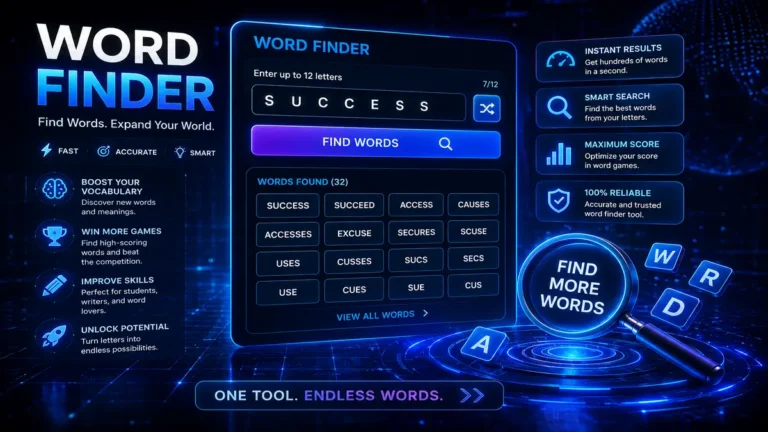
There are plenty of Find Words From Letters tools scattered across the internet, but most of them feel like they were built in 2005. Slow, cluttered with ads, and limited in functionality. WordWizy is different.
Lightning-Fast Results
Type your letters into WordWizy’s Word Unscrambler, and you’ll see every valid word — sorted by length and point value — before you finish blinking. The engine processes your input against a comprehensive dictionary in milliseconds.
Multiple Tools for Different Needs
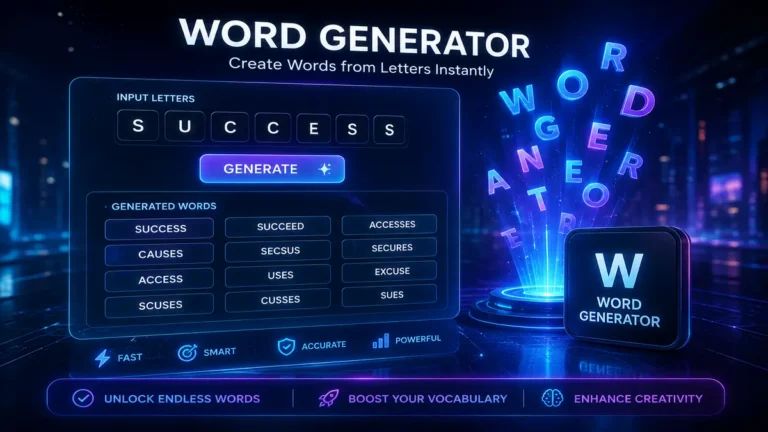
Need to find words from letters for Scrabble? The Scrabble Helper factors in tile values, board multipliers, and even blank tile substitutions. Working on an anagram puzzle? The Anagram Solver is built specifically for rearranging all your letters into a single word or phrase.
Each tool serves a focused purpose, so you always get results tailored to what you’re actually trying to do — not a one-size-fits-all dump of words.
Built for Learning, Not Just Answering
What sets WordWizy apart is that it’s designed to make you a better player over time. Each result set teaches you something new. You discover words you didn’t know existed. You see patterns in letter combinations. You build intuition that carries over into your next game — even when you’re playing without any tools.
Real-Life Scenarios Where a Letter Unscrambler Saves the Day
Let’s move beyond the abstract and look at concrete situations where a letter unscrambler is genuinely useful.
Scenario 1: The Scrabble Tournament Prep Session
You’re preparing for a local Scrabble tournament next weekend. You draw practice racks and try to find words from letters on your own, then check your answers against WordWizy’s results. Every word you missed becomes a study target. After a week of this routine, you walk into the tournament with a vocabulary 200 words larger than before.
Scenario 2: The Daily Wordle Struggle
It’s guess four of six, and you know the word contains an A and an R but not an E, S, or T. You need to find words from letters that fit those constraints. Plugging your known and excluded letters into a word finder narrows thousands of possibilities down to a manageable shortlist. You solve it in five instead of failing.
Scenario 3: The Classroom Vocabulary Exercise
You’re a teacher running a letter-scramble activity for your students. Instead of spending an hour building the answer key by hand, you use a letter unscrambler to generate all valid words from each set of letters in seconds. The time you save goes into actually teaching.
Need more ideas for building vocabulary? Our vocabulary building guide offers practical strategies that work for students and adults alike.
Scenario 4: The Crossword Puzzle Dead End
You’re stuck on a crossword clue. You know the answer is six letters long, and you have four of them filled in from crossing words. Feeding those known letters — with blanks for the unknowns — into a word finder gives you a short list of candidates. The answer clicks into place, and you finish the puzzle without resorting to looking up the clue itself.
Tips to Improve Your Word-Finding Skills Over Time
Tools are powerful, but the goal is to need them less — or to use them as a learning accelerator rather than a crutch. Here’s how to sharpen your natural ability to find words from letters.
Read Widely and Actively
The more words you’ve encountered in context, the faster your brain retrieves them during a game. Read books, articles, and essays across different subjects. When you hit an unfamiliar word, look it up and note it. That word is now part of your mental dictionary.
Play Word Games Daily
Consistency beats intensity. Five minutes of daily practice with a word puzzle does more for your skills than a three-hour marathon once a month. Your brain builds neural pathways through repetition, and those pathways become faster and more reliable over time.
Study Word Lists Strategically
Don’t try to memorize the entire dictionary. Focus on categories that yield the highest return: two-letter words, Q-without-U words, common seven-letter words (for Scrabble bingos), and words that use the J, X, and Z tiles effectively. These targeted lists punch far above their weight.
Review Your Misses
After every game, take two minutes to review the words you could have played but didn’t see. This is where a letter solver becomes a teacher. When you see “oh, I could have played ‘quaff’ with those letters,” your brain files that pattern away. Next time you draw Q-U-A-F-F, the word will surface on its own.
Challenge Yourself With Constraints
Try finding words that start with a specific letter, end with a specific suffix, or use exactly five letters. These constraints force your brain to search in unfamiliar directions, which builds flexibility. The more angles you can attack a letter set from, the more words you’ll find during actual play.
For more advanced strategies, explore our article on word puzzle strategies and learn how to consistently win more games. You might also enjoy our complete guide to the word scramble unscrambler for a different approach to solving letter puzzles.
Frequently Asked Questions
How do I find words from letters quickly during a game?
Start by scanning for common letter pairings like TH, SH, and ST. Then look for prefixes and suffixes in your tile rack. Work from short words upward, and use a tool like WordWizy’s Word Unscrambler during practice sessions to train your brain to spot patterns faster during actual play.
Is it cheating to use a tool to find words from letters?
That depends on context. In a casual game with friends, using a tool mid-game might feel unsportsmanlike. But using one after a game to review what you missed is pure study. During solo puzzles like Wordle, it’s entirely your call. Most serious players treat word tools the way chess players treat engines — as powerful training aids.
What’s the best free tool to find words from letters?
WordWizy offers a suite of free tools including a Word Unscrambler, Anagram Solver, and Scrabble Helper. Each one is purpose-built to help you find words from letters based on the specific type of puzzle or game you’re tackling.
How many words can you find from letters like A, E, R, S, T?
From just those five letters, you can form dozens of valid words: “stare,” “tears,” “rates,” “aster,” “rest,” “star,” “arts,” “ears,” “era,” “are,” “eat,” “set,” “tar,” and many more. The exact count depends on which dictionary you’re using, but a comprehensive letter solver will typically find 50 or more entries from a good five-letter set.
Can I find words from letters that include blank tiles or wildcards?
Yes. Most quality word tools — including WordWizy’s Scrabble Helper — let you designate one or more letters as wildcards. The tool then searches for all valid words where the wildcard could be any letter, dramatically expanding your results.
Does practicing with a letter unscrambler actually improve my skills?
Absolutely. Research in cognitive psychology confirms that exposure to patterns strengthens retrieval speed. Every time you see a word you didn’t know, your brain adds it to your accessible vocabulary. Players who review their results after each game consistently outperform those who don’t, often within just a few weeks of regular practice.
Start Finding Words From Letters Today
You now have everything you need: a step-by-step method to find words from letters on your own, five pro-level strategies to elevate your game, a clear understanding of the mistakes to avoid, and a powerful set of tools ready to accelerate your progress.
The only piece missing is action. Head over to WordWizy right now and try the Word Unscrambler with your trickiest letter set. See how many words you missed. Study the results. Then take what you’ve learned into your next game — and watch your scores climb.
Your letters aren’t random noise. They’re raw material. With the right approach and the right tools, every scramble becomes an opportunity. Stop staring at your tiles in frustration and start turning them into winning plays.
Ready to level up? Try WordWizy’s free word game tools and find words from letters faster than you ever thought possible.

One Comment
Comments are closed.