Brain Training Games: Powerful Ways to Think
Table of Contents
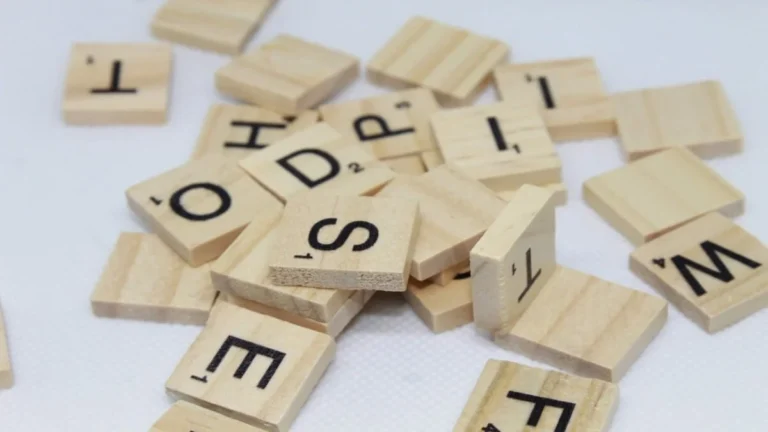
Brain Training Games are entertaining, but they are also quietly effective brain training tools. The mental gymnastics involved in scanning letters, recognizing patterns, and recalling vocabulary under time pressure engage several cognitive systems at once, making games like Scrabble, Wordfeud, and word puzzles a genuinely productive way to spend leisure time.
The Cognitive Skills Word Games Exercise
Playing word games regularly draws on working memory, since you have to hold multiple letters and potential word combinations in mind simultaneously. It also exercises pattern recognition, as your brain learns to spot common letter clusters and word shapes more quickly with practice. Processing speed improves too, since competitive play often involves working under a time limit, training your brain to make good decisions faster.
Why Brain Training Games Work Better Than Drills
Traditional brain training apps often rely on repetitive, abstract exercises that can feel disconnected from real-world skills. Word games, by contrast, train cognitive abilities in a context that directly transfers to reading comprehension, writing, and verbal communication. Because the challenge is embedded in an enjoyable activity, people tend to stick with word games far longer than they stick with generic brain training routines, and consistency is what actually drives cognitive benefit.
Brain Training Games Across Different Age Groups
- For children, word games build foundational spelling and vocabulary skills while making language learning feel like play rather than schoolwork
- For adults, regular word game play helps maintain sharp verbal recall amid busy, distraction-heavy daily life
- For older adults, research on cognitive aging frequently highlights word and puzzle games as an accessible way to keep the mind engaged and potentially slow age-related cognitive decline
Using Brain Training Games Tools to Train Smarter
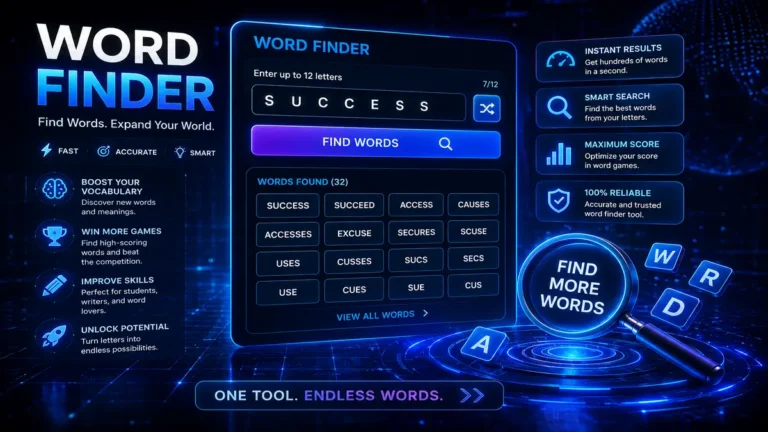
Word finders, anagram solvers, and unscramblers are not just for finding the answer; they can be used deliberately as training aids. Try solving a puzzle manually first, timing yourself, and only checking the tool afterward to see what you missed. Over time, tracking how quickly you solve puzzles compared to the tool’s instant results gives you a concrete measure of your own cognitive improvement.
Building a Consistent Brain Training Games Habit
Like physical exercise, cognitive benefits from word games come from consistency rather than occasional intense sessions. A short daily session, even just ten or fifteen minutes working through a puzzle or a few rounds of a word game, tends to produce better long-term results than an occasional multi-hour binge. Pairing this habit with variety, mixing anagram puzzles, crosswords, and competitive tile games, keeps different cognitive systems engaged rather than over-training a single narrow skill.
The Social Side of Brain Training Games
Many word games, especially Wordfeud and Words with Friends, are inherently social, played against friends or family over days or weeks. This social element adds an extra layer of motivation and accountability, making the brain training benefits easier to sustain compared to solitary puzzle apps that lack any social feedback loop.
Final Thoughts
Word games offer a rare combination of genuine cognitive benefit and real entertainment value. Whether you are trying to sharpen your mind, keep a loved one mentally active, or just enjoy a satisfying mental challenge, regular word game play is time well spent. Use the tools above to practice smarter and track your own improvement over time.
The Neuroscience Behind Brain Training Games Benefits
Research into cognitive training suggests that activities requiring active recall, like retrieving a word from memory rather than simply recognizing it when shown, produce stronger neural engagement than passive learning methods. Word games are almost entirely built around this kind of active recall, whether you are searching your own memory for a valid word or evaluating whether a proposed word is legitimate, which may explain why they show up so consistently in research on maintaining cognitive sharpness.

Brain Training Games as a Screen-Time Alternative
In a world where much of daily screen time involves passive scrolling or content consumption, word games offer a genuinely active alternative that still fits into the same digital habits and short attention spans many people have developed. Swapping even a portion of passive scrolling time for a quick word puzzle or a few Wordfeud turns is a low-friction way to make screen time somewhat more cognitively productive without requiring a dramatic lifestyle change.
Combining Physical and Mental Brain Training Games
While word games provide valuable cognitive exercise, research consistently shows that physical exercise also plays a significant role in maintaining brain health, particularly through improved blood flow and the release of growth factors that support neural health. The two are not competing strategies, and combining regular physical activity with consistent mental engagement through word games and puzzles likely offers more comprehensive cognitive benefit than either approach pursued in isolation.
Getting Started With a Brain Training Games Word Game Routine
For anyone looking to build a word game habit specifically for cognitive benefit, starting small is more sustainable than an ambitious daily commitment that quickly becomes a chore. A realistic starting point might be a single daily crossword or one round of Wordfeud, gradually adding variety and frequency as the habit solidifies, rather than attempting an intense routine from day one that risks burning out before any real benefit accumulates.
Want to explore more? See our guide on Vocabulary Building: Expand Your Word Knowledge and Word Puzzle Strategies: Solve Like a Pro. For further reading, check out Merriam-Webster Dictionary and the NASPA official word lists.
Frequently Asked Questions
Do word games actually improve brain function?
Research suggests word games can support memory and pattern recognition skills, though they are just one part of overall mental fitness.
How often should I play brain training games?
Short, regular sessions of ten to fifteen minutes a few times a week tend to be more effective than occasional long sessions.
What type of word game is best for memory?
Games that require recalling words under a time limit, like word scrambles or speed anagram games, are often highlighted for memory practice.

2 Comments
Comments are closed.