The Ultimate Word Finder Guide
Table of Contents
If you have ever stared at a jumble of letters on a game board wondering what on earth you can make out of them, you already know why a word finder is one of the most useful tools in any word game player’s arsenal. Whether you play Scrabble, Words with Friends, Wordfeud, or daily puzzle games like Wordle spinoffs, a reliable word finder turns frustration into fast, confident moves.
What Exactly Is a Word Finder?
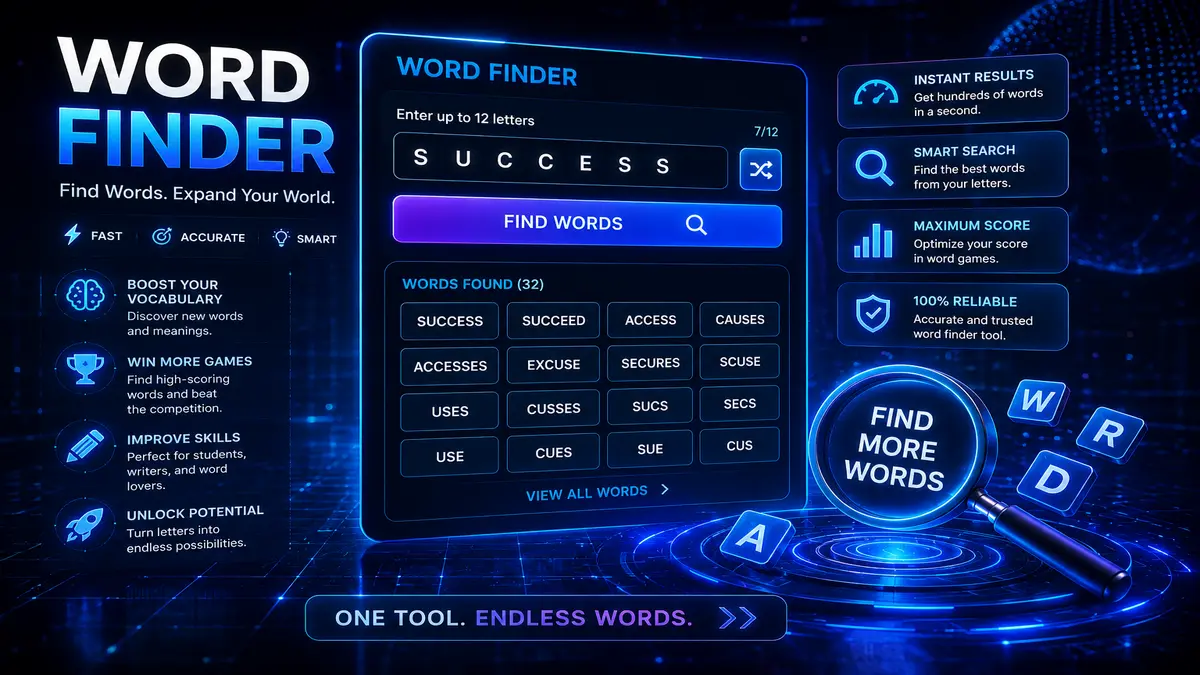
A word finder is a tool that takes a set of letters you provide and searches a dictionary database to return every valid word that can be built from those letters. Unlike a simple dictionary lookup, a good word finder handles partial letter sets, wildcards, and constraints like word length or specific starting and ending letters. This makes it far more powerful than manually flipping through a dictionary or brainstorming on your own.
Why Word Finders Matter for Serious Players
Casual players might only need a word finder occasionally, but competitive players rely on them constantly to check for missed opportunities. In Scrabble especially, the difference between a good player and a great one often comes down to spotting high-value words that use awkward letter combinations like Q, X, or Z. A word finder instantly surfaces these words, letting you focus your mental energy on strategy rather than raw recall.
How to Use a Word Finder Effectively
Getting the most out of a word finder starts with understanding its filters. Most tools let you search by exact letters available, word length, and starting or ending letter constraints. Here is a simple approach that works well in practice:
- Enter all the letters you have available, including any blank tiles as wildcards
- Filter by the maximum word length you can actually place on the board
- Use the starts-with or ends-with filters when you need a word to connect to existing tiles
- Scan results by point value if your tool shows scoring, prioritizing high-value letters like J, Q, X, and Z
Word Locators Beyond Board Games
Word finders are not just for Scrabble night. Crossword enthusiasts use them to fill in stubborn blanks, writers use them to escape repetitive vocabulary, and students studying for spelling bees or vocabulary tests use them to explore word families and patterns. Even puzzle designers use word finding tools to double-check that their crosswords and word searches only contain valid entries.
Building Better Vocabulary Through Word Finding
An underrated benefit of using a word finder regularly is the passive vocabulary growth that comes with it. Every time you search a set of letters and see unfamiliar words appear in the results, you have a chance to learn something new. Over time, players who use word finders consistently report recognizing far more valid words during actual gameplay, reducing their reliance on the tool itself. For a different angle on the same goal, try WordWizy’s Smart Word Generator, which lets you browse words by category and length instead of starting from a specific letter set.
Choosing the Right Word Locators Tool
Not all word finders are created equal. Look for a tool with a comprehensive, regularly updated dictionary, fast search performance, and flexible filtering options. Mobile-friendly design matters too, since most word game sessions happen on a phone or tablet during a quick break. A tool that also shows letter point values saves you the extra step of calculating scores manually.
Final Thoughts
Whether you are a competitive Scrabble player chasing a personal best score or someone who just enjoys the occasional word puzzle, a solid word finder belongs in your toolkit. It saves time, teaches new vocabulary, and levels the playing field against opponents who already rely on similar tools. Try running a few letter combinations through our Word Finder above and see how many words you have been missing.
Word Finders in Competitive Tournament Play
At the highest levels of competitive Scrabble, players study word lists for years and still use digital tools extensively during practice sessions, though not during sanctioned tournament play itself, where such tools are prohibited. The gap between casual and tournament play often comes down to how thoroughly a player has internalized the exact words a finder would surface, meaning regular practice with these tools during study sessions directly translates into stronger unaided performance later.
Word Locators and Different Game Formats
Not every word game uses the same rules or dictionary, which means a Word Locator tuned for one format may return results that are invalid in another. Scrabble tournament play in North America uses a different official dictionary than international Scrabble, for example, and Wordfeud maintains its own separate word list entirely. Understanding which dictionary your specific game or region uses, and choosing a finder tool that matches, prevents the frustration of finding a great word only to have it rejected by your opponent or the game itself.
Mobile Word Finding on the Go
Most word game sessions today happen on a phone, often during short breaks throughout the day rather than dedicated sitting sessions. This makes mobile-friendly design a genuinely important feature of any Word Locators tool, not just a nice bonus. Fast load times, large tap targets for filter options, and results that are easy to scan on a small screen all meaningfully affect how useful a tool actually is in real-world daily use, as opposed to how it performs in a demo on a large desktop monitor.
Want to explore more? See our guide on Word Generator: Create Words from Letters and Scrabble Helper: Boost Your Game Strategy. For further reading, check out Merriam-Webster Dictionary and the NASPA official word lists.
Frequently Asked Questions
What is a word finder tool?
A word finder tool takes a set of letters and returns every valid word that can be formed from them, often filtered by length.
How do word finder tools work?
They cross-reference the letters you provide against a dictionary database to identify all matching valid words.
Is it fair to use a word finder while playing word games?
It depends on the setting. Many players use them for practice or when stuck offline, but most consider it unfair during a live competitive match.



One Comment
Comments are closed.