Word Generator: Powerful Words Made Easy
Table of Contents
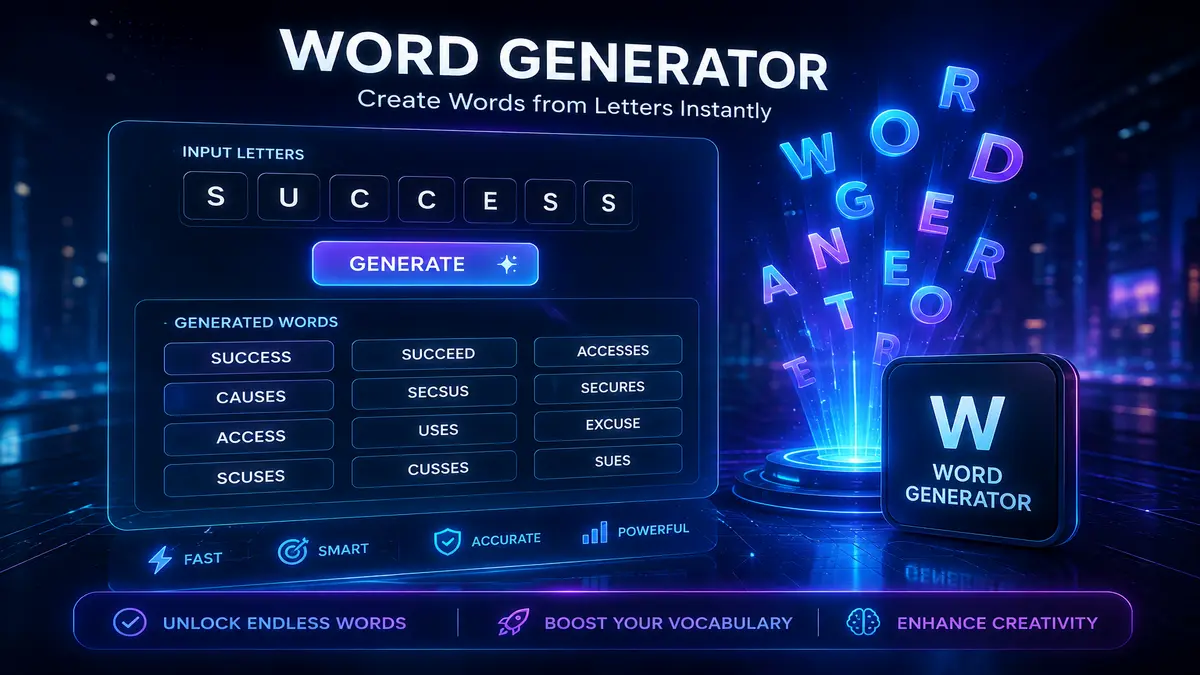
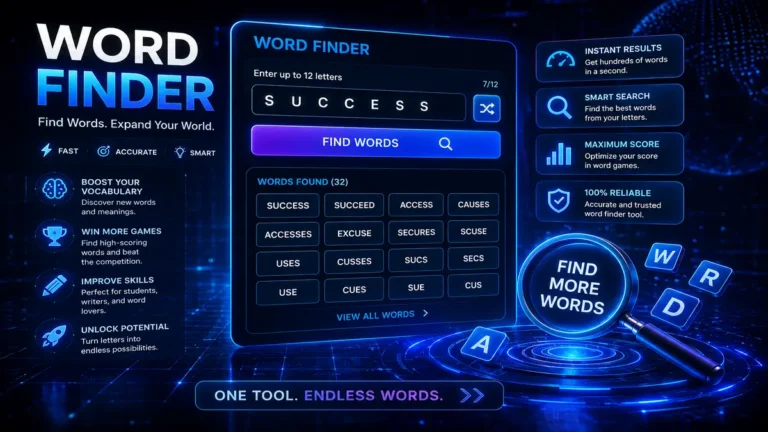
Ever needed to create a list of words from a specific set of letters, whether for a game, a puzzle you are designing, or just for fun? A word generator does exactly that, turning any collection of letters into a curated list of real, playable words. It is one of the simplest yet most versatile tools in the word game world.
What Is a Word Generator?
At its core, a word generator takes the letters you input and cross references them against a dictionary to produce every valid word those letters can form. Unlike a word unscrambler, which typically focuses on rearranging one specific set of letters, a word generator is often used more broadly, including generating words that use only a subset of your letters, generating random words for prompts, or generating themed word lists for a puzzle you are building.
Common Use Cases for a Word Generator
People turn to word generators for a surprisingly wide range of tasks. Teachers use them to build spelling lists and vocabulary worksheets. Game designers use them to populate word search puzzles and hangman-style games with valid entries. Writers use them to break through creative blocks by exploring unusual word combinations. And of course, competitive word game players use them to find every possible play from their available tiles.
How Word Puzzle Handles Letter Constraints
A quality word generator gives you control over the output through filters. You can typically specify minimum and maximum word length, starting letter constraints useful when building off an existing word, ending letter constraints helpful for rhyming exercises, and contains filters that require a particular letter combination anywhere in the word. These filters transform a generic list of hundreds of words into a focused, useful set that matches exactly what you are trying to accomplish.
Word Generators vs Random Word Puzzle
It is worth distinguishing between a letter-based word generator, which builds words from letters you supply, and a random word generator, which simply picks words at random regardless of any input. Both have their place. The letter-based version is essential for gameplay and puzzle solving, while random generators are more useful for creative writing prompts, naming brainstorms, or vocabulary practice where the goal is exposure to new words rather than solving a specific letter puzzle.
Tips for Getting the Most Out of Word Puzzle
To get genuinely useful results, start broad and then narrow down. Enter all your available letters first and review the full list before applying filters. This helps you spot opportunities you might not have considered, like an unusual four-letter word hiding among hundreds of combinations you could not have brainstormed manually. Once you have a sense of what is available, apply length or pattern filters to zero in on the best options for your specific situation, whether that is a high-scoring Scrabble play or the perfect answer for a crossword clue.
Word Puzzle for Learning and Fun
Beyond competitive play, word generators are a genuinely fun way to explore language. Type in the letters of your name, your city, or a random phrase and see what words emerge. It is a lighthearted way to discover vocabulary you might never encounter otherwise, and many people use this exact approach to warm up before a serious game session or a study period for a vocabulary exam.
Final Thoughts
A good word generator is more than a novelty. It is a practical, flexible tool that supports gameplay, education, puzzle design, and creative exploration all at once. Try entering a set of letters into our Smart Word Generator, apply a few filters, and see just how many words you have been overlooking.

Word Generators for Content Creators and Marketers
Beyond games and education, Word Puzzles have found a niche among content creators looking for naming inspiration. Podcasters searching for a memorable show name, small business owners brainstorming a brand, and app developers naming a new feature all sometimes turn to letter-based generators, feeding in initials or key concept words to see what unexpected combinations emerge. This creative use case rewards experimentation more than precision, since the goal is inspiration rather than a single correct answer.
Combining Word Puzzle With Other Tools
Many serious word game players do not rely on a single tool in isolation. A typical workflow might involve generating a full list of possible words first, then cross-referencing promising candidates against a scoring calculator or a dictionary definition lookup to confirm both validity and value before committing to a play. Treating a word generator as the first step in a small toolkit, rather than a standalone solution, tends to produce better results than relying on any single tool alone.
Common Misconceptions About Word Puzzle
A frequent misconception is that Word Puzzle only produces common, everyday words, when in fact a well-built generator with a comprehensive dictionary will surface genuinely obscure entries most players have never encountered. Another misconception is that using a generator is somehow less legitimate than manual word finding, when in reality any tool, digital or otherwise, is simply a way of accessing the same underlying dictionary knowledge more efficiently than unaided memory allows.
Want to explore more? See our guide on Anagram Solver: Unscramble Words Instantly and The Ultimate Word Finder Guide. For further reading, check out Merriam-Webster Dictionary and the NASPA official word lists.
Frequently Asked Questions
What is a word generator used for?
A word generator creates valid words from a given set of letters, which is helpful for games, puzzles, and vocabulary practice.
Can a word generator create words for any set of letters?
It can only return words that actually exist in its dictionary, so an unusual combination of letters may return few or no results.
Is a word generator useful for Scrabble or Wordle?
Yes, it is commonly used to explore possible plays in Scrabble or to brainstorm valid guesses in Wordle.

3 Comments
Comments are closed.